
GET LIT: Environmental literature for coastal living
As residents of a coastal environment, we live with many unknowns. We don’t know for sure when the next storm will hit. We aren’t sure how far our barrier islands will shift with the next storm. We don’t know if our fishermen’s nets will be quite as full this year as in years past.
But there are things that we can know about our environment, and we owe it to ourselves to stay informed. Here’s a few books that you can read if you want to stay conscious, informed, and aware of what’s going on in your local environment, as well as actions you can take to make a difference with what you learn.
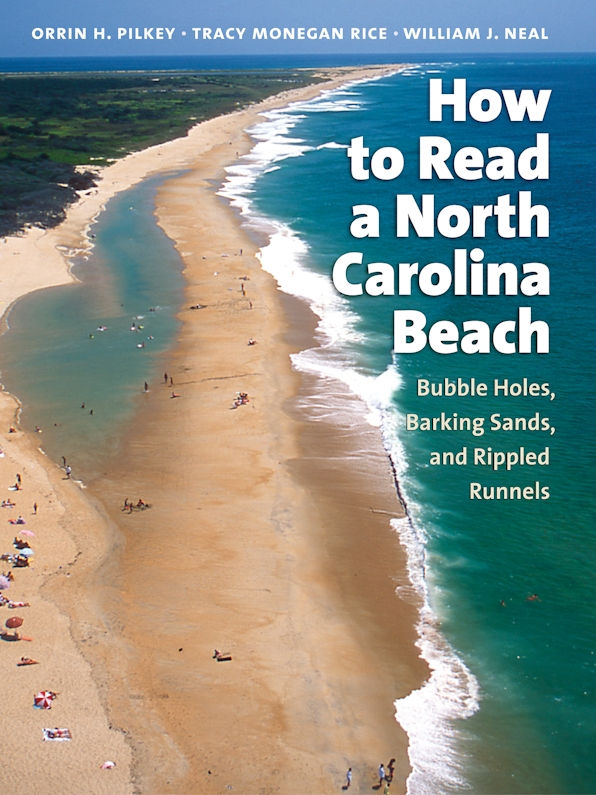
by Orrin H. Pilkey, Tracy Monegan Rice, and William J. Neal
As you take a walk on your favorite local beach, do you ever wonder how each grain of sand got there under your feet? Do you ever wonder about how dunes formed, how they shift and change, or how they protect the land beyond? Have you ever thought about how jetties and groins work, or why they exist in the first place? Have you ever caught yourself wondering about the shells, how they got their color, how far they traveled, how they washed up right there in front of you? What other signs of life are we missing when we look down at the sand?
In “How To Read a North Carolina Beach,” authors Orrin H. Pilkey, Tracy Monegan Rice and William J. Neal answer all of these questions and more.
Drawing on decades of combined research and scientific studies between them, Orrin, Tracy and William open this incredibly easy-reading book full of facts by taking a wide angle. “The Big Picture” paints an image of a beach full of wonder, with diagrams and photos beginning to describe the nature of these wonders. Dunes, shells, and driftwood take on new meaning as each chapter teaches you how to decode the messages that tell us how beaches function. While reading this book, you can’t help but become an active observer of your environment. The coast begins to seem alive. You’ll catch yourself bringing this book with you every time you go to the beach, searching for hints in the sand that you finally know how to understand. Awareness is the first step towards preservation.

by Earl Swift
In “Chesapeake Requiem” by Earl Swift, you’ll be swept up in a deeply human drama that unfolds along the coast. Swift spent nearly two years living on Tangier Island in the Chesapeake Bay among the residents and watermen. In “Chesapeake Requiem,” he unravels a narrative that is deeply American. Tangier island, sinking into the Chesapeake, loses land every year. At the root of the story sits the question: is it cheaper to build a sea wall that probably won’t even work, or to relocate all 500 residents? Younger residents are moving to the mainland, older residents are dying, but the watermen who remain fight to preserve their way of life. They are a biblical bunch, and the conviction they carry throughout the book is remarkable. The Tangier Island community Swift describes is a beautiful one, full of strength, resilience, and tradition. Swift gives us a glimpse of what it will be like to slowly lose that place and that community. And in doing so, suggests a deeper, more haunting question: What happens if we have to relocate not hundreds but millions of coastal residents?
This book will arm you with empathy and with the understanding that coastal cultures, communities, and traditions really are that important and should be preserved. In order for that to happen, however, the environment must be respected.

By Anne Morrow Lindbergh
You’ve probably seen Anne Morrow Lindbergh’s 1955 classic “Gift from the Sea” on a few coffee tables around these parts. Through this collection of essays, she takes us on a journey to the center of ourselves. During a visit to the sea, Lindbergh meditates on solitude, personhood, identity, simplicity in nature, and so many themes in between. This book will have you looking inwards, finding new understanding about yourself and your soul.
Lindbergh’s book seeks to remind you that the human desire to help, to say something and to fight for our environment is a call of survival. You are nature, and Lindbergh’s essays will help you to see the parts of yourself that deserve preservation and protection. We can’t save the world unless we save ourselves, and we won’t save the world unless we can see ourselves in it.
Looking for more good green reads?
If you’re searching for a group of folks with whom to discuss this environmental literature, look no further than Cape Fear’s Going Green Environmental Book Club. The Going Green book club featured “Gift from the Sea” as their first book back in 2011. Since then, the group has met monthly to discuss a variety of books about the environment across genres, both classics and new releases. In April, they’ll discuss “Eat Like a Fish: My Adventures Farming the Ocean to Fight Climate Change” by Bren Smith, and in May they’ll discuss “Flight Paths: How a Passionate and Quirky Group of Pioneering Scientists Solved the Mystery of Bird Migration.”
The group meets at Old Books on Front Street on the first Wednesday of the month, 6-8 p.m. Check out their website for more information about meetings and books.


